How to Organise a Church Potluck That Actually Runs Smoothly
By Mel Schembri · Published 2026-05-29 · Faith Community
A step-by-step guide to organising a church potluck, from the sign-up to the clean-up. Works for Sunday suppers, fellowship meals, and holiday gatherings.
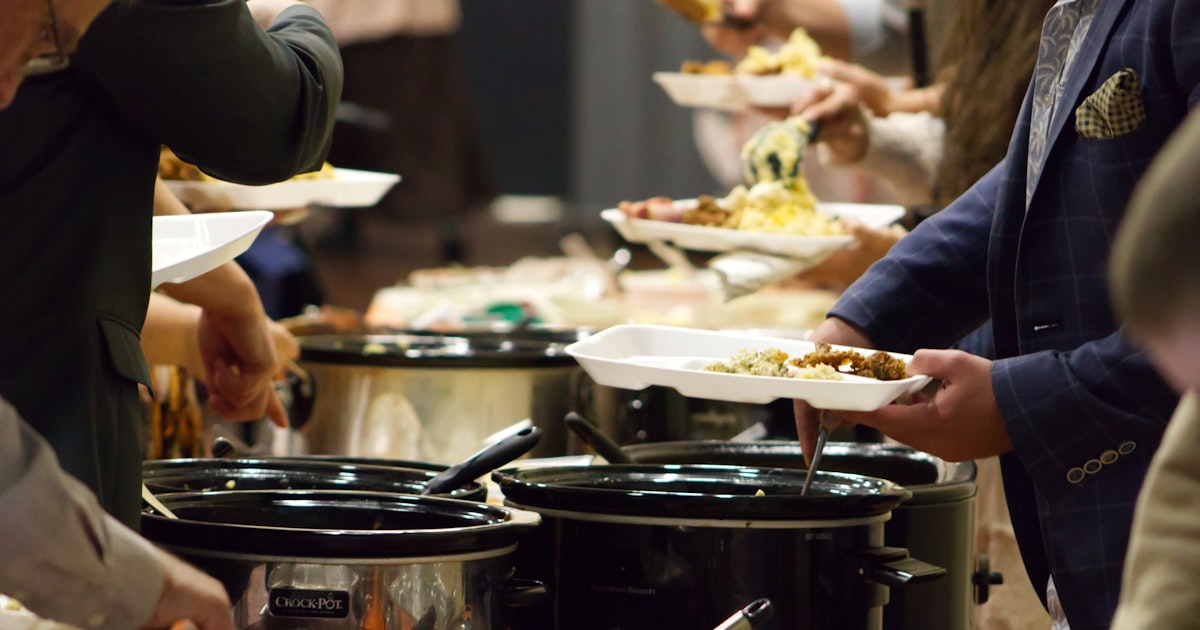
Church potlucks are one of the oldest forms of community meal coordination. They also have a few predictable failure modes: seven casseroles and no bread, nobody labelled the gluten-free dishes, and the person who usually organises it is burned out after the fifth year.
This is a practical guide to running a church potluck that actually runs smoothly. Nine steps, most of which also apply to mosque iftars, synagogue kiddush lunches, and any recurring faith community meal.
Step 1: Start with a permanent group, not a one-off sign-up
The single biggest mistake in church potluck coordination is treating each event as standalone. You set up a sign-up sheet, people fill it in, the event happens, the sign-up sheet gets archived or lost. Next month, you start from zero.
A recurring group, a Circle in GetLadle, a standing email list, a WhatsApp group, accumulates value over time. Dietary flags once collected. Addresses once shared. Recipes once saved. All carry over.
For a church, this Circle might be "Fellowship Meals" or "Parish Suppers." Permanent members are anyone who regularly attends or wants to be involved. New members can be added as the community grows.
Setup: 20 minutes once. Used for the next decade.
Step 2: Agree on the cadence
Potlucks work best when the cadence is predictable. First Sunday of the month. After the Easter service. Fourth Friday for Lent. Whatever your community settles on.
Ad-hoc potlucks are harder because people cannot plan their life around them. A predictable rhythm means members can volunteer in advance, shift duty in fair rotation, and know when to show up.
Step 3: Assign a coordinator rotation
The single person bearing the coordination burden is the main reason potlucks die. After two years, they are exhausted. Nobody else has learned the system. The whole thing folds.
A rotation fixes this. Three or four coordinators, each running one quarter of the year. Or six coordinators on a two-month rotation. Each knows the system, each has a turn, each gets rest between turns.
The Circle's shared system makes rotation easy. Everyone uses the same tools. Everyone sees the same history. Nobody owns the spreadsheet.
Step 4: Set the menu structure per event type
Different events need different menus. Build templates so the coordinator on duty does not start from a blank page each time.
Fellowship supper (40 people):
- 2-3 mains
- 1 pasta or rice dish
- 3-4 sides
- 2 salads
- Bread
- 2-3 desserts
- Drinks, tea, coffee
Easter / Christmas potluck (80 people):
- 4-5 mains
- 2 starches
- 6-8 sides
- 3-4 salads
- Bread
- 6-8 desserts
- Drinks, tea, coffee
Weekly simple lunch (20 people):
- 1-2 mains
- 2 sides
- Salad
- Bread
- Dessert
- Drinks
In GetLadle, these menus can be saved as event templates in the Circle. Coordinator on duty picks the template, adjusts for the specific event, shares the sign-up link.
Step 5: Share a sign-up link, not a verbal ask
"Can someone bring a salad?" in coffee hour after the service is a terrible coordination method. Someone remembers, someone forgets, two people volunteer, three people think the request was aimed at someone else.
A shared link that everyone in the Circle can access shows the full menu with what has been claimed and what is open. Members claim dishes themselves. Nobody has to be asked in person.
GetLadle events generate a shareable link that opens in a browser (no app required for guests). Members see the menu, claim, attach a recipe if they want, and they are done.
Step 6: Track dietary restrictions properly
In any congregation of 30+ people there will be gluten intolerances, dairy issues, nut allergies, vegetarians, vegans, and people managing medical conditions that require specific diets.
The rule: every dish at a church potluck should have a card with its name and any allergens. Make labels mandatory, not optional.
In GetLadle, Circle members set their dietary flags once. Event sign-ups carry the flags. If a member has a severe nut allergy, the app flags any dish whose recipe contains nuts before the event so the dish-bringer or the coordinator can adapt or warn.
Step 7: Rotate who brings the popular dishes
Every congregation has a few star cooks. Mrs. Anderson's green bean casserole. Father Michael's pulled pork. The Johnsons' pavlova. These are beloved but if those dishes monopolise the same slots every month, two things happen:
- Other cooks stop contributing because their dishes do not "measure up."
- The star cooks burn out because they are always volunteering for the same thing.
The gentle fix: invite the star cooks to try different slots occasionally, and actively invite newer or quieter contributors to bring the main dishes. Over time, the menu diversifies and the load spreads.
The Circle history helps here. Looking at the last six events, you can see who has brought what. Any coordinator can notice that Mrs. Anderson has brought green beans for six months straight and gently ask if she'd like to try something different.
Step 8: Save the recipes
The recipes from every potluck should go into the Circle cookbook. Not "maybe, if we remember." Always.
Two reasons:
1. Institutional memory. In 10 years, someone will want to recreate the Easter dinner that Mrs. Rodriguez used to host. If the recipe is in the Circle cookbook, they can. If not, it is lost.
2. New members can learn what the community cooks. A newcomer to the church browses the Circle cookbook and understands what the fellowship meals look like, what dishes recur, what the community cares about.
In GetLadle, attaching a recipe to a dish at an event is a one-tap action. After the event, the recipes stay in the Circle cookbook permanently, organised by contributor.
Step 9: Do a short debrief after each event
Five minutes at the next coordinator handover meeting:
- What worked?
- What ran short or over?
- Any allergy incidents?
- Any improvements for next time?
Not a long meeting. Just a note in the Circle so the next coordinator benefits.
The accumulation effect
A church potluck coordinated this way looks like a lot of setup at first. The return on investment is years.
After 12 months:
- A Circle with 40-80 permanent members
- Dietary flags collected for every regular attendee
- 12 event templates refined
- A cookbook of 100+ community recipes
- A rotation of 4-6 coordinators who each know the system
After 5 years, the coordination system is running itself. New members slot in. Veteran members have their preferred dishes on record. Coordinator handovers take five minutes. The potluck continues through coordinator illness, family emergencies, and life events because the system holds.
This is the actual point. Not making one potluck easier. Making the whole tradition sustainable across decades.
What GetLadle provides
- Circles for the permanent group
- Events with dish sign-up, dietary tracking, reminders
- Shared cookbook for the community recipe archive
- The free plan for events up to 25 guests; either cooking subscription for up to 25; Feast Mode ($59.99 one-time) for unlimited guests and the coordinator toolkit
Related reading
- Best potluck planning app in 2026
- How to coordinate a potluck without duplicate dishes
- The best app for church potlucks
Try GetLadle free. Circles, events, shared cookbook. Feast Mode available for large gatherings. Start at getladle.com.
Frequently asked questions
What is the best way to organise a church potluck?
Use a sign-up system that lets every member see what dishes are needed, claim one, and note any dietary restrictions. GetLadle's Circles are built for recurring groups like churches, one setup, used for years, with dish sign-ups and a shared cookbook that grows with every event.
How many dishes should a church potluck have?
Roughly one dish per two attendees for a full meal. For 40 people, plan for 20 dishes split across mains, sides, salads, breads, and desserts, plus drinks. Smaller events can run at one dish per three attendees.
How do I handle dietary restrictions at a church potluck?
Ask every RSVP to flag allergies and restrictions. Use clearly labelled cards at the table showing ingredients and allergens. GetLadle tracks dietary flags on Circle members once and carries them over to every event, so you do not re-collect them every month.