How to Plan an Office Potluck People Actually Enjoy
By Mel Schembri · Published 2026-07-25 · Potlucks
A step-by-step guide to the office potluck: real sign-ups, no six desserts and one main, allergy labels, and logistics the break room can handle.
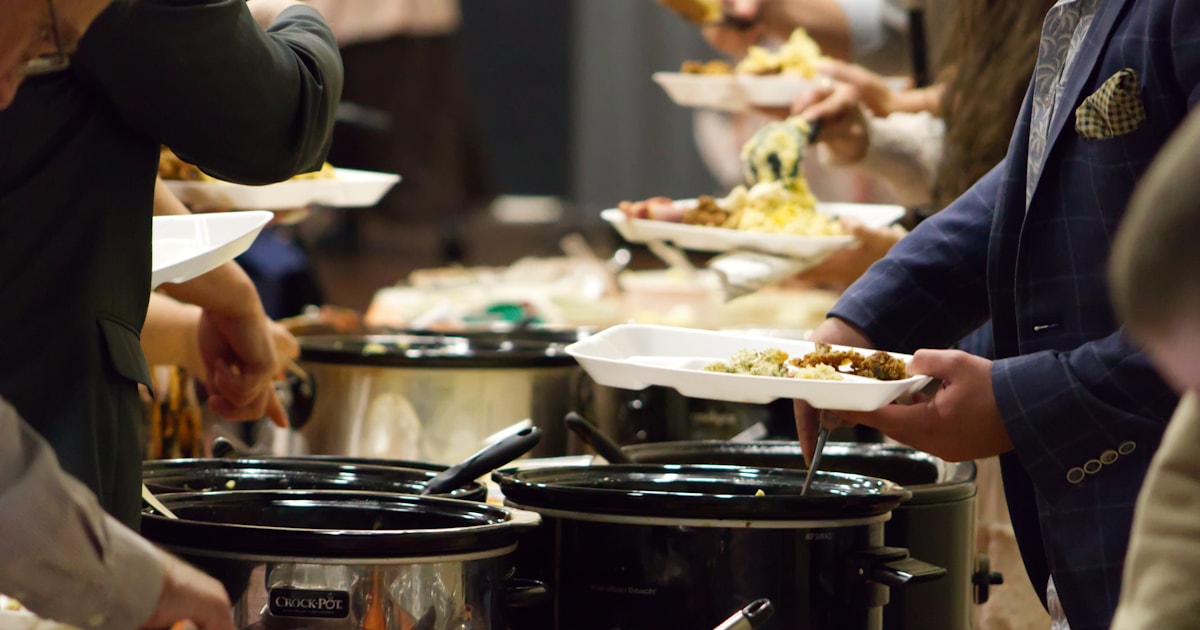
The office potluck occupies a strange place in workplace culture. Done badly, it is a sad folding table with six bags of chips, two identical pasta salads, one heroic homemade curry that vanishes in four minutes, and a colleague with a nut allergy eating nothing but her own crackers. Done well, it is genuinely the best thing that happens in that office all quarter. People who have only ever exchanged meeting invites discover that Priya makes staggering dumplings and that the quiet man in finance bakes like a professional.
I have catered-by-committee more office potlucks than I can count, first as an employee and now as the person who built an app for exactly this. The difference between the sad table and the great one is about ninety minutes of organising, done in the right order. Here is the order.
Step 1: Get the headcount and the dietary picture first
Before anyone talks menus, find out how many people are actually coming and what they cannot eat. Offices are dense with dietary needs: allergies, religious requirements, vegetarians, vegans, gluten-free colleagues, and people fasting or avoiding alcohol. Send one short message asking for a yes or no on attendance and any dietary needs, and give it a real deadline. This is not box-ticking. The difference between "twenty people, two vegans, one severe nut allergy, four halal" and "dunno, maybe thirty?" changes every decision that follows.
At work this matters more than at a family potluck, because colleagues will quietly not eat rather than make a fuss, and then the potluck has failed at its one job, which is making people feel included.
Step 2: Build a menu with specific slots, not a vibe
"Bring something to share" is how you get nine desserts and no lunch. Instead, work out what a real meal for your headcount looks like and write it as specific slots. For twenty people: three or four mains with at least one vegetarian and one halal-friendly, three substantial sides, two salads, bread or rice, three desserts, and drinks. Add slots for the unglamorous essentials that always get forgotten: plates, napkins, serving spoons, and ice. Someone who has no time to cook can claim napkins and still be a legitimate contributor, which beats them grabbing supermarket cookies out of guilt.
I have written more about why specific slots beat open categories in how to coordinate a potluck without duplicate dishes, and every word of it applies double at work, where the default dish is always chips.
Step 3: Use a sign-up list, never a reply-all thread
The reply-all email thread is where office potlucks go wrong. Claims get buried under out-of-office replies, nobody scrolls back through forty messages to check what is taken, and two people arrive proudly holding the same pasta salad. The fix is a single visible list where every slot shows as open or claimed, and where claiming something closes it for everyone else.
In GetLadle, you create the potluck as an event, add the slots from Step 2, and drop one link in the team channel. Colleagues open the link in a browser, no download and no account gymnastics, see the live list, and claim a dish. The dietary notes from Step 1 sit right on the event, so the person choosing what to cook sees "severe nut allergy" at the exact moment it matters. If you are currently the person who maintains the potluck spreadsheet by hand, this is precisely the time it saves.
Step 4: Sort the office logistics before the food
Offices are terrible kitchens, and the potluck has to be planned around that fact. Walk the break room and answer honestly: how much fridge space exists on a normal Tuesday, one microwave or two, is there an oven at all, are there serving utensils or just a drawer of sad forks? Then set expectations in the sign-up notes: dishes should arrive ready to serve or need at most two minutes of microwave time, and anything requiring refrigeration must fit in one shelf's worth of space.
This step is why room-temperature-friendly food wins at office potlucks. Frittatas, grain salads, curries that hold, traybakes, dips and flatbreads. A dish that needs twenty minutes in an oven that does not exist is a casualty, not a contribution.
Step 5: Set the portion maths and the timing
Tell contributors the actual brief: enough for eight to ten small servings, because potluck plates are grazing plates. Twelve dishes at that size feeds twenty people generously. Then be blunt about timing, because office potlucks have a hard start. Food arrives by 11:45 for a 12:15 lunch, and someone, named in advance, owns the table setup. Without a named setup person, the potluck starts fifteen minutes late while everyone stands around the break room radiating hunger and politeness.
Because the GetLadle event shows exactly how many dishes are claimed, you can see on Wednesday that you have eleven desserts-and-sides and one main, and fix it with a friendly nudge days before, rather than discovering it when the table is laid.
Step 6: Send reminders that name the dish
Two days out, every contributor should get a reminder with their specific claim. Not "potluck Friday!" but "you are bringing the dal, ready to serve, by 11:45." Colleagues are drowning in notifications, and the specific reminder is the one that survives, because it reads like a task rather than an announcement. GetLadle sends these automatically to everyone who claimed a slot, which means you are not spending Thursday afternoon personally chasing the sales team.
Step 7: Label everything on the day
Put a card in front of every dish: what it is, who made it, and the allergy-relevant contents. Contains nuts. Vegan. Gluten-free. Pork. This takes ten minutes, and it converts the buffet from a guessing game into something the colleague with coeliac disease can actually enjoy without interrogating five cooks mid-queue. It also gives credit where it is due, and credit is half the point. Priya's dumplings should be famous under Priya's name.
If dishes were claimed in GetLadle with their recipes attached, the labels practically write themselves, ingredients and all.
Step 8: Capture the recipes and make it a series
The best moment of any office potluck happens at 12:40, when someone says "who made this? I need the recipe." Do not let that moment evaporate into a promise to email it. Attach recipes to the dishes in the event, and the whole team can find them afterwards. This is also how one good potluck becomes a tradition. Keep the group as a Circle, and the next potluck is a ten-minute job: duplicate the event, keep what worked, rotate the theme. Teams that run quarterly potlucks this way build a shared cookbook that outlasts reorgs, and honestly does more for morale than most official initiatives, at a cost of exactly nothing, since events are free on GetLadle on every tier.
A good office potluck is a small act of civilisation. It says the people you work with are people, with grandmothers and homelands and signature dishes. Ninety minutes of organising buys you that. Spend them.
Plan your team's next potluck, try GetLadle free. One link, real sign-ups, no reply-all. Sign up here.
Related reading
- How to coordinate a potluck without duplicate dishes
- How a potluck coordination app actually saves you time
- The best potluck planning app in 2026
Frequently asked questions
How do you organise a potluck at work?
Get a headcount and dietary needs first, build a menu with specific dish slots, and use a visible sign-up list instead of a reply-all email thread. Then sort the boring logistics early, like fridge space, warming options, plates, and serving spoons. GetLadle handles the sign-up side with a shared event link where colleagues claim dishes, no app download needed.
How much food should each person bring to an office potluck?
Ask each person to bring enough for eight to ten modest servings, not a full meal for the whole office. Potluck maths works because everyone takes small portions of many dishes, so twelve contributors comfortably feed twenty people. A sign-up list in GetLadle shows how many dishes are actually coming, so you can spot a shortfall days before the event instead of at noon.
What should you not bring to an office potluck?
Skip anything that needs last-minute cooking, precise oven timing, or refrigeration the office cannot provide, and be careful with common allergens like nuts unless clearly labelled. Dishes that hold at room temperature for a couple of hours are the safest bet. Listing dishes in GetLadle ahead of time lets colleagues flag allergy concerns before the day rather than at the buffet table.