Why Step-by-Step Guided Cooking Beats Scrolling a Recipe on Your Phone
By Mel Schembri · Published 2026-08-04 · Cooking
Scrolling a recipe mid-cook is how dinners go wrong. Why one step at a time works better, and how GetLadle's Cook This mode puts it into practice.
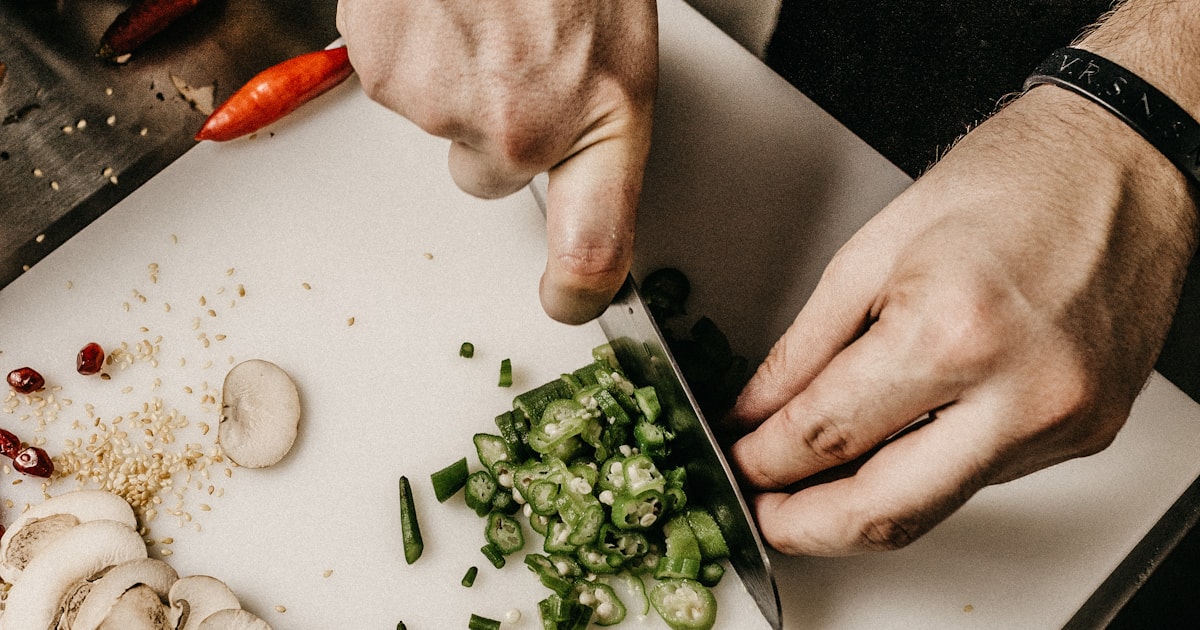
Picture the scene, because you have lived it. Your hands are covered in flour, the onions are one minute from catching, and your phone has gone dark on the counter. You nudge it with a knuckle. The screen wakes on a recipe you have scrolled halfway down, and now you are skimming twelve steps of dense paragraph trying to find your place while the kitchen fills with the smell of almost-burnt. Was it two teaspoons or two tablespoons? That information is somewhere above, past the photo, past the life story, and your thumb is wet.
We have all quietly accepted this as what cooking from a phone is like. I want to argue that it is not a phone problem at all. It is a format problem, and it has a fix, and the fix is old.
A recipe is two documents pretending to be one
Here is the thing nobody tells you about recipes. A recipe is written as an archive but used as a performance. The archive version, everything on one page, ingredients up top, method below, is brilliant for deciding what to cook, for shopping, for comparing two versions of a ragù. It answers the question "what is this dish?"
But standing at the stove, you are not asking what the dish is. You are asking exactly one question, over and over: what do I do right now? And the archive format is spectacularly bad at answering it. It hands you the entire document and makes you do the finding, every single time you look, under time pressure, with your hands full. Reading a full recipe mid-cook is like an actor being handed the whole script every time they forget a line.
Professional kitchens solved this long ago. A chef mid-service does not consult a recipe book, they work from the immediate next action. Grandmothers solved it differently, by having someone in the kitchen with them, a mum saying "right, now the flour, slowly". What both solutions share is that they deliver instructions one at a time, at the moment of need. That is what guided, step-by-step cooking actually is. It is not a gimmick. It is the performance format the recipe always needed.
What scrolling actually costs you
The damage from cooking off a scrolled page is not just irritation. It is real, and it compounds.
Lost place, lost timing. Every re-find takes ten or twenty seconds, and cooking is one of the few domestic activities where twenty seconds genuinely matters. Garlic goes from golden to bitter inside that window. So you rush the reading, and rushed reading is how tablespoons become teaspoons.
Skipped steps. When your eyes jump back to a wall of text, they anchor on the wrong paragraph more often than you would believe. Everyone who cooks from a phone has, at least once, discovered an unadded ingredient sitting in its little bowl at plating time. That is not carelessness. That is the format working exactly as badly as designed.
The confidence tax. This is the quiet one. Nervous cooks, new cooks, kids learning, a partner taking on more of the kitchen, are the people most punished by the wall-of-text format, because they cannot yet fill gaps from experience. A format that overwhelms beginners is a format that keeps people from cooking, and I care about that far more than I care about the garlic.
One step at a time changes how cooking feels
Cook This is GetLadle's step-by-step cooking mode, and the idea could not be simpler. You open a recipe you have saved in GetLadle, tap Cook This, and the recipe stops being a document. The screen goes full-screen with one step at a time, big enough to read from across the counter, and you swipe to move forward when you are ready, not when the page decides.
Two details do most of the work. First, each step highlights the ingredients that step actually uses. This sounds minor and is not, because it means the question "was it two teaspoons?" is answered right there in the step, without a scroll back to the top and a scan down a twenty-line list. Second, timers are built in, so when a step involves time, the timer lives with the instruction instead of in a separate app you have to set up with oniony fingers while the step disappears behind it.
What surprises people is not that this is more convenient. It is how different cooking feels. When the screen holds only the current step, the recipe stops being a test you might be failing and becomes a person walking you through it. One thing, then the next thing, then the next. My eight-year-old can follow it, which I mention not as a cute aside but as the entire point: the format is the difference between a recipe being usable by everyone in the household or only by its most confident cook.
Better recipes in means better cooking out
I will be honest about one thing: step-by-step mode is only as good as the recipe behind it, and this is where saving your recipes properly pays off twice. When you import a recipe into GetLadle from any URL, including the TikToks and Reels currently dying in your saved folder, it is stored as structured steps and ingredients, not a screenshot. That structure is exactly what Cook This runs on. The same is true of the family recipes you have been meaning to write down, and there is something genuinely moving about your nan's trifle, captured once, walking your daughter through itself step by step twenty years later.
It also changes what sharing a recipe means. When a friend shares a recipe into your GetLadle Circle, they are not handing you a link that might die or a photo you will squint at. They are handing you the guided version, the one that will stand at the stove with you. That is a better gift. Half of why people do not cook the recipes friends send is that the recipes arrive in unusable formats, and a recipe you can actually follow is a recipe that actually gets cooked, which is the moment the whole exchange was for. Cook a friend's dish through Cook This, post the I Made It photo, and the loop closes: they get the notification, you get the dinner.
The stakes are dinner, and dinner matters
I built GetLadle because the food that connects people, the shared recipes, the potlucks, the Sunday dinners, kept falling apart on logistics. Cook This attacks the smallest and most personal of those logistics: the twenty seconds at the stove where a recipe loses you. Fix that moment a few hundred times a year and the household cooks more, the nervous cook volunteers for Saturday, the kid makes the pancakes alone, and the shared table gets easier to set. Small format, large consequences.
The recipes you already have deserve better than being scrolled at. Save one into GetLadle tonight, tap Cook This, and cook it the way recipes were always meant to be given: one step at a time, from someone who wants you to get it right. Start free at /signup, floury hands and all.
Related reading
- How to organise your TikTok recipes so you can actually cook them
- How to share family recipes across generations
- The best app to share recipes with friends and family
Start coordinating your group meals, try GetLadle free. One Circle, shared recipes, and free events on every tier. No credit card. Sign up at getladle.com.
Frequently asked questions
Why is step-by-step cooking mode better than reading a recipe?
A recipe page shows you everything at once, which forces you to find your place again every time you look back at the screen, usually with wet hands and something in the pan. A step-by-step mode shows one instruction at a time, so a glance tells you exactly what to do next. GetLadle's Cook This mode does this full-screen, with the ingredients for the current step highlighted so you are never rescanning the whole list.
Does GetLadle have a cooking mode with timers?
Yes. Cook This is GetLadle's full-screen step-by-step cooking mode, and it has timers built in, so when a step involves time you can run the timer right where the instruction is. You swipe between steps as you go, and each step highlights the ingredients it uses.
What app helps you cook a recipe without losing your place?
GetLadle. Its Cook This mode turns any saved recipe into full-screen steps you swipe through one at a time, so your place in the recipe is simply the step on the screen. With per-step ingredient highlighting and built-in timers, you stop rescanning the recipe and just cook.