Meal Planning as a Couple Without One Person Carrying It All
By Mel Schembri · Published 2026-08-03 · Meal Planning
The mental load of feeding a household usually lands on one person. Here is how to actually share meal planning and prep, with GetLadle as neutral ground.
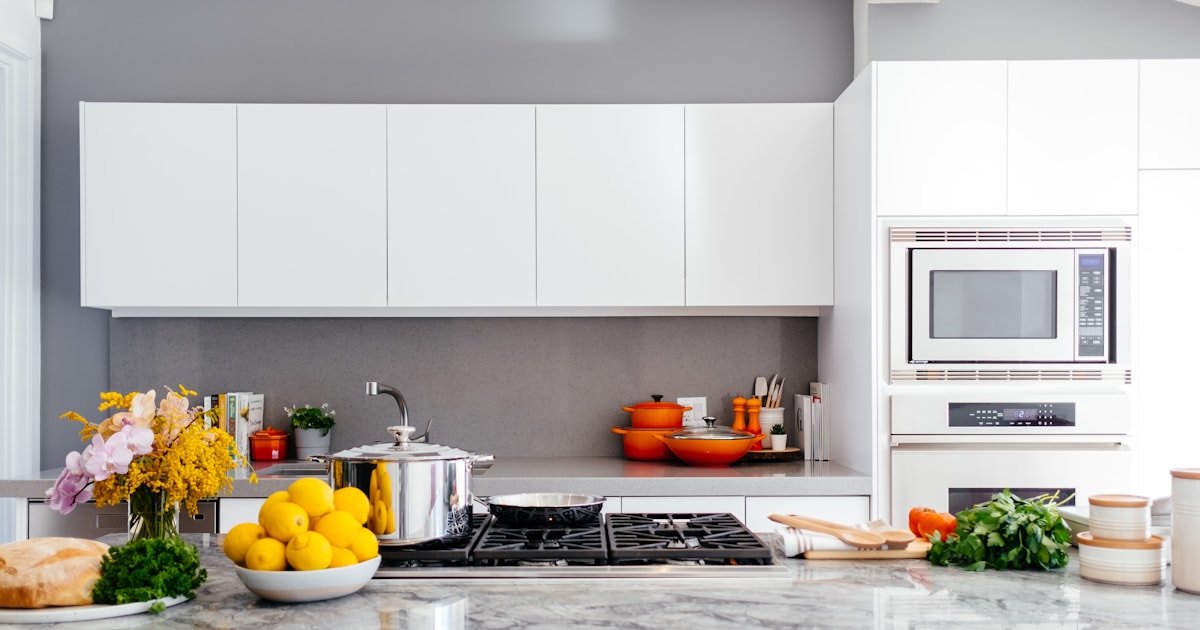
There is a question that lands in thousands of kitchens at about half past five every evening, and it is almost always aimed at the same person. What's for dinner?
Not "what shall we have", which would be a conversation. What's for dinner, meaning: you are the keeper of that information, please dispense it. In most households one person, and let's be honest about the statistics, usually a woman, carries the entire invisible apparatus behind that answer. What is in the fridge. What the kids will eat this month. What was had too recently to repeat. What defrosts in time. What the week ahead looks like. The other partner might cook plenty, might do every wash-up, and still contribute nothing to the part that is actually exhausting, which is the deciding.
This is the mental load, and food is its largest province. I want to write about how couples actually get out of this, because I have lived both sides of it, and because I accidentally built a tool that helps and then watched users teach me why.
Helping is not the same as sharing
Here is the trap well-meaning partners fall into. They say "just tell me what to cook and I'll cook it", and they genuinely believe they have offered to share the work. They have not. They have offered to become an employee. The planning partner still holds the menu, the inventory, the preferences, the schedule, and now also a small delegation job on top.
Sharing the load means sharing the thinking. The test is simple: if one partner disappeared for a fortnight, would the other know how to feed the household without a briefing document? If the answer is no, the knowledge lives in one head, and the load lives with it.
The fix is not for the loaded partner to try harder at delegating. The fix is to move the knowledge out of anyone's head entirely and into a place both people can see. Systems share; memories do not.
Own nights, not tasks
The single best structural change I know is this: divide the week into nights, and each partner owns their nights completely. Owning Tuesday means planning Tuesday, making sure Tuesday's ingredients exist, and cooking Tuesday. Not "cooking whatever appears", the whole vertical slice, thought included.
This works because it makes the invisible work visible by attaching it to the visible work. A partner who owns three nights a week discovers, usually within a fortnight, what the deciding actually costs, and something shifts permanently in how the household talks about food. It also fails gracefully. If Tuesday's owner has a nightmare day and orders a pizza, that was Tuesday's decision to make, and nobody else has to absorb it.
In our house this lives in GetLadle. We have a Circle that is just the two of us plus the family one, and the weekly plan shows who is cooking what, with the recipe attached to the night. My husband adds his nights, I add mine, and the plan sits where both of us can see it, which sounds trivially small and changes everything. The half-past-five question stops being aimed at a person and starts being aimed at an app, and the app does not experience resentment.
The Sunday twenty minutes
Night ownership needs one small ritual to hold it together: a weekly planning sit-down, and it should be short. Ours is Sunday, coffee, twenty minutes, both phones open. We look at the week's calendar, claim nights around it, and pull recipes into the plan.
The pulling is where a shared cookbook earns its keep. Half the friction of planning is generating ideas from a blank page, and a blank page is not actually your situation, because between you, you have cooked hundreds of dinners. They are just scattered, in heads, in screenshots, in a graveyard of saved TikToks. We spent a month importing our real rotation into GetLadle, everything we genuinely make, not aspirational cheffery, and planning collapsed from a creativity exercise into a shopping trip through our own greatest hits. When one of us finds something new during the week, it gets saved into the Circle then and there, so it is sitting in the pile next Sunday.
Then the plan generates the shopping list, aggregated across the whole week and organised by aisle, and either of us shops from it. This kills the other classic asymmetry, where one partner writes the list and the other phones from the shop asking which beans. The list is the list. GetLadle wrote it from the recipes. Nobody is the oracle.
Prep together, or prep apart, but decide once
Some couples love a shared Sunday prep session, music on, one person on vegetables and one on grains, boxes lined up like a small victory. Others would rather divorce than share a chopping board. Both are fine. The load is not in the chopping, it is in the deciding, and by Sunday afternoon the deciding is already done. Prep however suits you; the point is that the thinking happened once, together, instead of daily, alone.
A word to the partner reading this who currently carries the load: the hardest part of sharing it is letting it actually be shared. That means their Tuesday gets to be different from your Tuesday. Maybe it is the same stir-fry every single week. Maybe the vegetable content is legally questionable. If you own the standards, you still own the load, just with extra steps. The plan being visible in GetLadle helps here too, gently, because a rotation of one recipe becomes self-evident without anyone having to say a word, and people vary their own patterns far more willingly than they take menu notes.
This scales past two of you
Everything above works for any household shape, roommates splitting weeknights, an adult son cooking for parents two evenings a week, kids old enough to own a Friday. A GetLadle Circle does not care about your household's org chart, everyone in it sees the same plan and the same cookbook, which is why the same setup handles group meal planning across whole extended families. Start with two. The pattern stretches.
And when the week includes other people, the same Circle plans the dinner party, with events free on every tier, so the machinery you built for Tuesdays handles Saturdays too. The couple that shares the load for four also hosts for twelve without one person silently doing everything, which, I can report from experience, is a different marriage entirely.
The point is not efficiency
I should say this plainly, because meal planning content is forever promising optimisation. The reason to do any of this is not to save minutes. It is that resentment grows in the dark, and the food mental load is one of the darkest corners a household has, precisely because the work is invisible and endless and never once acknowledged by the people eating it.
Making the plan shared makes the work visible. Making the work visible makes it thankable. That is worth more than the time. If sharing recipes with your favourite person is where it starts, sharing the thinking is where it lands.
Sit down this Sunday, twenty minutes, two phones. Start your Circle free at /signup, claim your nights, and let GetLadle be the keeper of the plan, so that neither of you has to be.
Related reading
- The best group meal planning app in 2026
- The best app to share recipes with friends and family
- How to organise your TikTok recipes so you can actually cook them
Start coordinating your group meals, try GetLadle free. One Circle, shared recipes, and free events on every tier. No credit card. Sign up at getladle.com.
Frequently asked questions
How do couples share the mental load of meal planning?
Split the thinking, not just the cooking. That means both people can see the plan, both add to it, and the week gets decided together in one short sitting instead of one person fielding the daily what's-for-dinner question. A shared space like a GetLadle Circle makes the plan visible to both of you, which is the difference between helping and actually sharing the job.
What is the fairest way to divide cooking in a household?
Own whole nights end to end rather than assigning tasks. Whoever owns Tuesday plans it, shops for it, and cooks it, so the invisible deciding work moves with the visible cooking work. In GetLadle each person adds their nights to the shared plan with the recipe attached, and the shopping list builds itself from everything planned.
Can GetLadle help two people meal plan together?
Yes. A Circle can be just the two of you, with a shared meal plan both can edit, a shared cookbook of your actual rotation, and one shopping list generated from the week and organised by aisle. Either of you can check items off at the shop, and neither of you has to be the keeper of the plan.
Related reading
- The best group meal planning app in 2026
- The best app to share recipes with friends and family
- How to organise your TikTok recipes so you can actually cook them
- Splitting the dinner decision between two people, not one
- A meal plan two people can actually see and edit
- The best meal planning apps for couples, and one to avoid right now