Organising a meal train so meals don't pile up on the same days
To start a meal train without everyone bringing lasagna, use a calendar where each day's slot is visible and claimed, not an open request where everyone independently picks the safest, easiest dish. Ask the recipient about allergies, dislikes and portion sizes before the first meal goes out, and space meals across the weeks the family actually needs help rather than clustering them all in the first few days. A visible schedule with dietary notes attached does the coordination a group chat or a verbal ask-around can't.
Lasagna happens when nobody can see what's already been claimed — a visible calendar fixes it, not better guessing.
Why the lasagna problem happens
A meal train usually starts with a good instinct — "let people know when to bring food" — and a bad mechanism: an open ask in a group chat or a sign-up sheet nobody's checked in a week. Without visibility into what's already been claimed, each contributor makes the same safe, independent choice: something that travels well, freezes if needed, and doesn't require asking the family what they actually want. That's how a fortnight of meal trains turns into six lasagnas and nothing else.
Step 1: Set the schedule across the actual need, not the first week
Space meals across as many weeks as the family will genuinely need help, not just the first flurry of goodwill after the news breaks. A calendar that's fully booked for the first ten days and empty after that leaves the harder, later stretch uncovered.
Step 2: Ask about dietary needs once, up front
Collect allergies, dislikes and portion needs before the first meal goes out, and put the answer where every contributor can see it — not something each person has to ask the recipient individually, which gets exhausting for a family already stretched thin.
Step 3: Make the calendar visible, not just requested
A meal train works the same way a potluck does: a slot only stops getting duplicated once it's visibly claimed. A shared calendar where each day shows who's signed up removes the guesswork that leads to six lasagnas.
Step 4: Be careful with money and contact details
Established meal-train tools sometimes layer a donation or gift-card option on top of the calendar — Meal Train's own reviewers note an 8% fee taken from donations made through the platform. And at least one competing tool shares "names and phone numbers... visible to all helpers" by default. If the family doesn't need a payment feature, a simple calendar avoids both issues.
How GetLadle handles this
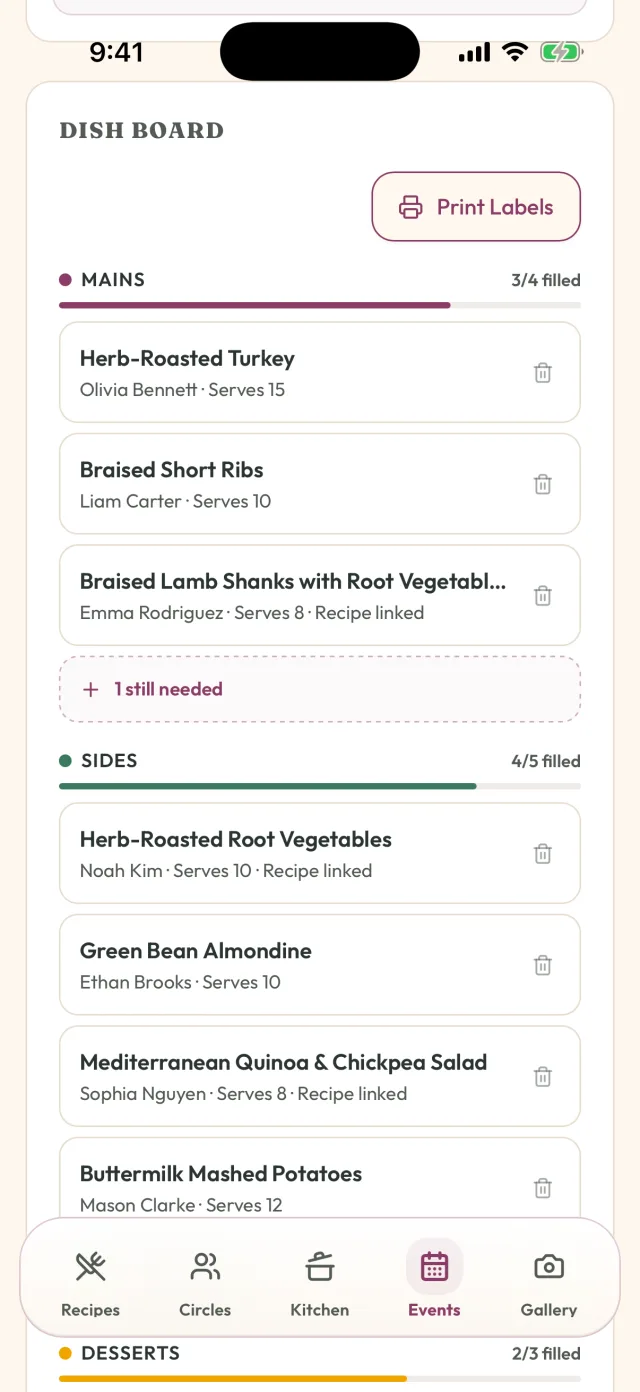
A GetLadle event works as a meal-train calendar: each day is a claimable slot, contributors see what's already covered before they sign up, and dietary needs are collected once and shown to everyone bringing food, not asked for individually. There's no donation or gift-card layer to configure or take a cut from. Events, RSVPs and dish claiming are free on every plan, and there's no limit on how many events you can run.
Once the train is running
Check in with the family partway through — needs change, and a slot that made sense in week one might not fit by week four. Adjust the remaining schedule rather than leaving it fixed from the day it was first set up.
If someone signs up but has to cancel close to their date, make that visible immediately rather than leaving it for the recipient to notice a meal never arrived. An open slot two days out is something another contributor can still fill; a silently dropped one usually isn't discovered until it's too late to fix.
It's also worth naming an end date, even a rough one, when you set the schedule up. A meal train with no visible end tends to trail off awkwardly, with contributors unsure whether the family still needs help; a schedule that runs for a set number of weeks and can be extended if needed is easier for everyone to commit to.
Frequently asked questions
Why does everyone bring the same dish on a meal train?
Without a visible calendar, each contributor decides independently what feels safe and easy to bring, and lasagna, soup and casseroles are the default choices most people reach for. A schedule that shows what's already been claimed on which day stops the pile-up because the safe choice is already taken.
How do I ask a meal-train recipient about dietary needs without being intrusive?
Ask once, early, as part of setting up the schedule — allergies, dislikes, portion sizes and any household members with different needs. Put the answer somewhere every contributor can see it before they cook, rather than asking each person to check individually.
Do meal-train tools cost anything?
The core calendar on established meal-train sites is free to set up. Some add optional donation or gift-card features on top, and at least one has an 8% fee taken from those donations — worth checking before you point contributors toward a money-collection feature you don't need.
Related
- How to host a holiday dinner without missing a dietary need
- How to plan a potluck without duplicate dishes
- How to Organise a Meal Train for a New Parent or Someone Unwell
- Meal Train Meals That Actually Help
- GetLadle for Potlucks
Sources
- Meal Train homepage
- Trustpilot: Meal Train reviews
- Teaspoon of Spice: comparing meal-coordination calendars
Last reviewed 2026-09-15 · GetLadle