Hosting a holiday table when everyone eats differently
To host a holiday dinner without missing a dietary restriction, collect every guest's needs before you plan the menu, not after, and keep the list somewhere the person cooking each dish can see it. Build two or three dishes that everyone can eat rather than one separate dish per restriction, and label the rest clearly at the table. The failure mode isn't cruelty — it's that dietary information gets mentioned once, in passing, and forgotten by the time the cooking starts.
Ask once, in writing, before you plan the menu — not at the table when it's too late to change anything.
Why dietary needs get missed
Dietary information usually isn't withheld — it's mentioned once, informally, and then forgotten by the time cooking starts. An Ask a Manager thread on office potlucks put it plainly: "people are notoriously allergy-unaware and far too many people will faithfully write out all the ingredients... but not add that they always add their own dash of paprika." The same pattern shows up at holiday dinners: someone mentioned being vegetarian back in October, and by the third Saturday of November nobody preparing the meal remembers.
A host planning a genuinely mixed table described the scale of the problem well: "Two are vegans, one macrobiotic, one gluten free, one keto. My husband says cook the usual Thanksgiving feast. I want to make all my guests happy, but this is just crazy!" Trying to cook a separate dish for every diet is how hosts burn out before the guests arrive.
Step 1: Ask everyone, in writing, before you plan
Send one message to the full guest list asking about allergies and diets, at the same time you confirm numbers. Asking everyone — not just the guests you suspect have a restriction — catches needs you wouldn't have guessed and removes any awkwardness about being singled out.
Step 2: Build the menu around what's shared
Look for two or three dishes that work across most of the restrictions on your list — a roasted vegetable side with no dairy or gluten will usually cover more guests than four bespoke dishes. Add one or two dishes specific to a need you can't cover any other way, rather than reworking the whole menu around a single guest.
Step 3: Label clearly at the table
Not everyone who needs to know a dish is safe will ask directly. A small card by each dish naming the obvious allergens (nuts, dairy, gluten) lets guests decide for themselves without a conversation.
Step 4: Keep the list visible to whoever is cooking each dish
If dishes are split across a family or a potluck-style table, the person cooking a specific dish needs to see the dietary list too — not just the host. A note passed on verbally is exactly how the "dash of paprika" problem happens.
How GetLadle handles this
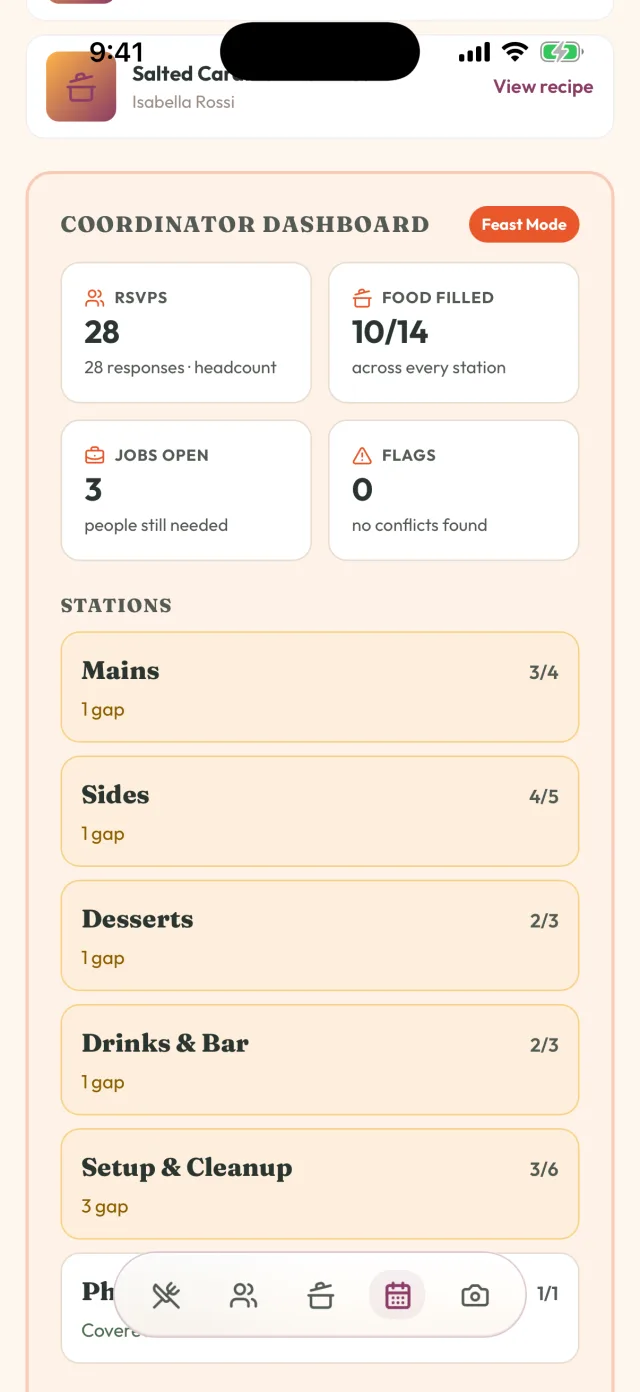
GetLadle tracks dietary information at the recipe level, not just against a person, so a host can see whether a specific claimed dish is actually safe without asking the guest individually. On a GetLadle event, guests enter their dietary needs on the same page where they RSVP and claim a dish, and that list is visible to the host and to whoever is cooking — not buried in a message from six weeks ago. Feast Mode adds a dedicated allergy register with printable allergen labels for the table, on top of the event tools included on every plan.
The week of the dinner
Check the dietary list again a few days out, once the final headcount is settled, and confirm with anyone whose dish covers a specific restriction that nothing's changed. A guest cancelling or a late RSVP can quietly shift what the table actually needs.
Frequently asked questions
How do I ask holiday guests about dietary restrictions without it being awkward?
Ask everyone the same short question when you send the invite, not just the guests you suspect have a restriction. A simple 'any allergies or diets I should know about?' sent to the whole list normalises the question and catches needs you wouldn't have guessed.
Do I need a separate dish for every dietary restriction?
No. Build two or three dishes that work for most restrictions at once — a vegetable side with no dairy or gluten covers more guests than a bespoke dish per person — then add one or two dishes specific to a restriction you can't cover any other way.
What if a guest mentions a dietary need at the table, not beforehand?
Say so plainly rather than guessing what's safe. It happens, and one Ask a Manager commenter described exactly this: guests write out ingredients but leave out 'their own dash of paprika.' Point to dishes you're confident about and offer to check the others.
Related
- How to plan a potluck without duplicate dishes
- How to organise a potluck without a group chat
- Hosting a Group Dinner When Everyone Has a Dietary Restriction
- How to Divide Thanksgiving Cooking Across the Family
- GetLadle for Church Potlucks
Sources
Last reviewed 2026-09-15 · GetLadle