Getting grandma's recipe box out of the actual box
A family recipe app that works across generations needs to turn a photograph of a handwritten card into a searchable recipe, then put it somewhere every relative can find it, not a shared folder nobody opens. Photograph each card, let GetLadle's photo scan extract the ingredients and steps, and save it to a private family circle. Anyone invited to that circle can see it for free, even if only one person has a paid plan. Photo scanning itself needs Sous Chef or Head Chef, since the free plan does not include it; saving recipes by pasting a link or typing text is free, 15 a month.
One person needs a paid plan to scan the cards; everyone else in the family can join the circle for free to see them.
What makes preserving family recipes different
A family recipe rarely disappears all at once. It fades the way The Kitchn describes: "old handwritten family recipe cards too often spend most of their time hidden away in boxes" — not lost, just unreachable, until the person who could read the handwriting is gone. The pattern repeats across families who moved somewhere new entirely: a Quora thread asks directly "how do family recipes get passed down through generations of immigrant families," where the recipe itself is often the last direct link to a place nobody in the family currently lives. Others ask the simpler, practical version of the same need: "are there any good sites for families to share personal recipes with each other," and "how do I create a virtual recipe box."
None of these are asking for a recipe. They're asking where to put one so it survives the next move, the next generation, or the next time nobody can quite remember the handwriting.
What a multi-generation archive needs that a single share doesn't
Digitising one card is a five-minute job (photograph it, let photo scan extract the ingredients and steps, check it once against the original — the mechanics are the same however many cards you have). Keeping that archive usable across generations is a different problem: who has access without paying, how it stays organised as it grows past a few dozen recipes, and what happens to it after the person who wrote the cards is no longer around to ask.
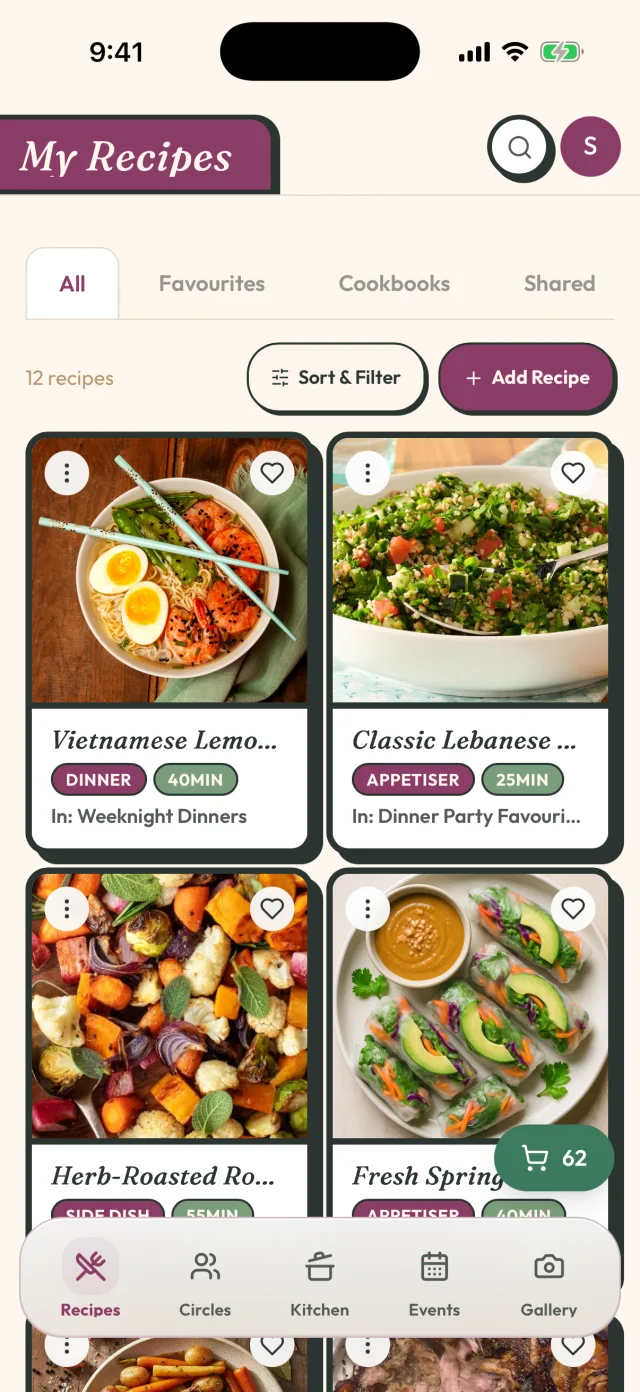
That's what a family circle plus cookbooks solves. The circle is the access layer — a private, invite-only group, not a public post or a shared folder anyone with the link can open, that every relative joins once and sees everything added to it after. Cookbooks are the organisation layer on top: group by person, by holiday, or by side of the family, so a grandmother's recipes or a specific holiday's menu sit as their own book rather than one long flat list. New recipes from this year's dinners go into the same circle the old ones did, so it stays a living archive rather than a one-time project that stalls after the first weekend.
How GetLadle handles family recipes across generations
Photo scan turns a photograph of a printed page, cookbook page, recipe card, or handwritten card into a saved recipe with its ingredients and steps extracted. It is a Sous Chef and Head Chef feature — the free plan includes 0 photo scans a month, Sous Chef includes 10, and Head Chef is unlimited — so one relative typically takes on the scanning with a paid plan. Circles are private and invite-only, and joining one someone else created is free on every plan, so the rest of the family can see and use the recipes without each person needing to pay. Cookbooks then organise the growing collection into something browsable rather than a flat list.
Recipes added by pasting a link or typing text (rather than photographing a card) stay on the free plan's normal allowance: 15 new recipe saves and 15 imports a month, with everything already saved staying in the library regardless.
Every recipe, scanned or imported, has a private notes field alongside it and a comment thread the rest of the circle can see. That matters for a family archive specifically — the note that says "always double the garlic, grandma never wrote it down" is often worth as much as the recipe itself, and it belongs attached to the card, not in a separate text someone will eventually lose.
Frequently asked questions
Can I photograph a handwritten recipe card?
Yes, using photo scan. The free plan includes 0 photo scans a month, so digitising cards needs Sous Chef (10 scans a month, $5.99 CAD/mo) or Head Chef (unlimited scans, $11.99 CAD/mo).
Can the whole family see the recipes without everyone paying?
Yes. The free plan lets anyone create one circle and join an unlimited number of circles others create. So one relative needs a paid plan to scan the cards, and everyone else can join the family circle for free to see them.
Can we organise recipes into a book, like by person or holiday?
Cookbooks group recipes into collections — one free on the Apprentice plan, up to 5 on Sous Chef, unlimited on Head Chef — so a grandmother's recipes or a holiday's menu can sit as its own book inside the family circle.
Start your family recipe circle
Related
- How to share family recipes without retyping them
- How to Share Family Recipes Across Generations (Before You Lose Them)
- Digital Family Recipe Box: What It Is and Why You Need One
- Supper Club App for a Rotating Group
- Compare GetLadle
Sources
- The Kitchn: turning handwritten recipes into tea towels
- Quora: how family recipes get passed down through immigrant families
- Quora: good sites for families to share personal recipes
- Quora: how to create a virtual recipe box
Last reviewed 2026-09-15 · GetLadle