Cooking from what's already in the house, not what's on a fresh list
To cook from what's in the fridge without a wasted grocery trip, keep a running list of what you actually have before you plan meals or shop, rather than shopping first and hoping it lines up with a recipe. Without that list, it's easy to buy ingredients for a dish and only notice afterwards that half of what you needed was already in the fridge, or to let something go off because nothing on the week's plan used it. Checking what's on hand before you plan turns "what can I make with this" from a guessing game into a starting point.
Plan from what you already have, then shop for the gap — not the other way round.
Why the fridge stays a guessing game
Standing in front of an open fridge trying to remember what's in the crisper drawer, whether the chicken is still good, and what you already have three-quarters of a jar of is a hard way to plan a meal. Without a written record, it comes down to memory — and memory is exactly where a half-used bag of spinach or an odd vegetable from last week's shop quietly gets forgotten until it's gone off. People actively look for a way around this: "are there apps/websites where you can put in what you have in your fridge and it shows recipes using those ingredients?" is a genuine, recurring question, not a rare one.
The wasted grocery trip usually isn't buying too much. It's buying a duplicate of something you already had, or shopping for a whole recipe's ingredient list when half of it was already in the house.
Step 1: Write down what's actually there
Keep a running list of what's in the fridge, freezer and pantry — not a perfect inventory, just enough to know roughly what you have without opening the door to check. Update it as you use things up or buy more.
Step 2: Plan from the list, not from a recipe you found first
Look at what's on hand before you decide what to cook, rather than choosing a recipe and then checking whether you have everything for it. Starting from the ingredients you have narrows the choice in a useful way instead of an overwhelming one.
Step 3: Shop for the gap, not the whole list
Once the plan is set, your shopping list only needs to cover what you're missing — not everything the recipes call for. This is where the wasted trip actually gets avoided: you're not buying a second bag of rice you already had.
Step 4: Prioritise what's about to turn
If something on the list is close to its use-by date, plan it into the next couple of days rather than letting the freshest ingredient you bought sit until it's the one you have to throw out.
How GetLadle handles this
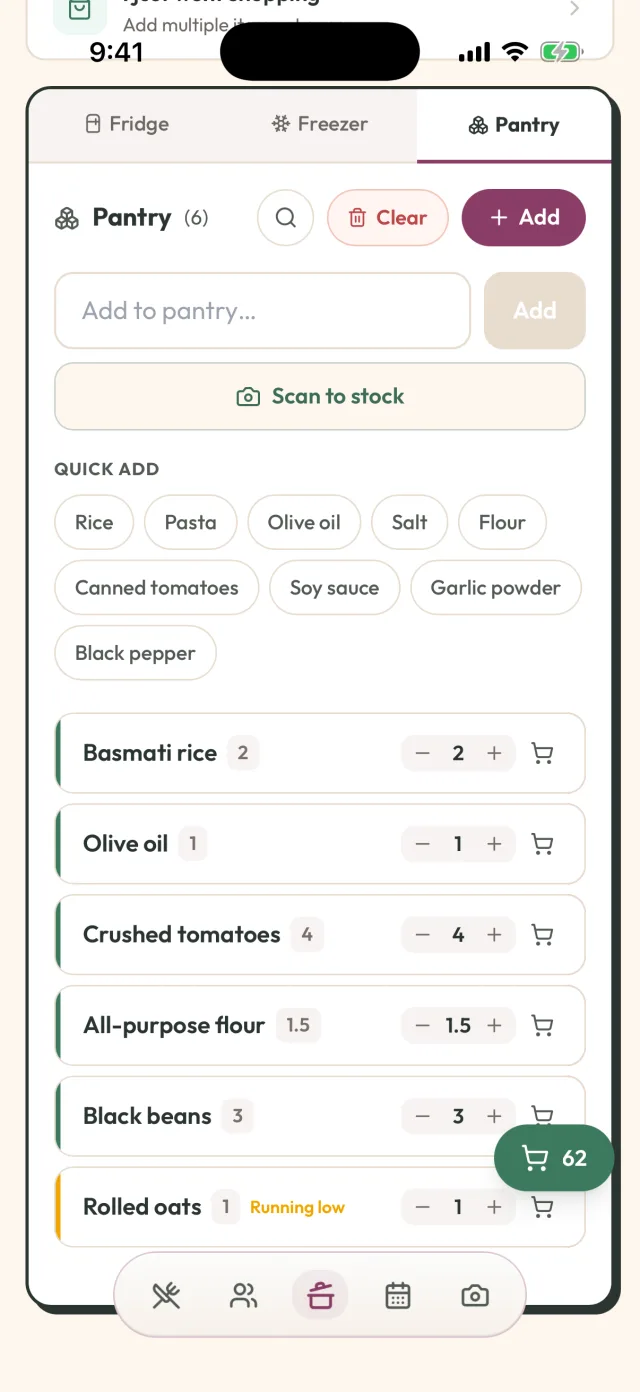
GetLadle's pantry tracks what you have in the fridge, freezer and pantry, including barcode lookup for quick entry, so the list stays current without much effort. The weekly meal planner and pantry work together — plan meals with an eye on what's already there, and the shopping list that builds from your plan on Sous Chef and Head Chef only needs to cover what's actually missing.
Keeping the list honest
Update it in the moment — after you unpack a shop, or when you use the last of something — rather than trying to reconstruct it from memory once a week. A pantry list that's a week out of date is only marginally better than no list at all.
This matters most for a household with more than one person cooking. If only one person keeps the list in their head, everyone else is back to guessing, and the list stops preventing the duplicate purchases and forgotten ingredients it was meant to catch.
Frequently asked questions
How do I know what I can cook with what's already in the fridge?
Keep a running list of what's actually in the fridge, freezer and pantry rather than trying to remember it while standing in front of the open door. With the list in front of you, matching it against recipes is straightforward; without it, you're relying on memory and usually default to something familiar.
Does tracking what's in the fridge actually reduce food waste?
It helps most with the items that quietly go off unused — a half bag of spinach, odd vegetables from last week's shop. Seeing them on a list before you plan the next few meals makes it far more likely they get used rather than forgotten at the back of a shelf.
Should I shop before or after I check what I already have?
Check first. Shopping before checking is how you end up buying a second jar of something you already own, or ingredients for a dish when most of it was sitting in the fridge already. Plan around what's on hand, then shop for the gap.
Related
- How to meal plan as a couple without one person doing it all
- How to keep your recipes safe without trusting one app
- Freezer Meals for Hosting Season: Cook Once in September, Host Calmly Through Christmas
- Meal Planning for Families: The Simple System That Actually Works
- Compare GetLadle
Sources
- Quora: apps that suggest recipes from fridge ingredients
- Quora: an app for entering ingredients on hand
Last reviewed 2026-09-15 · GetLadle